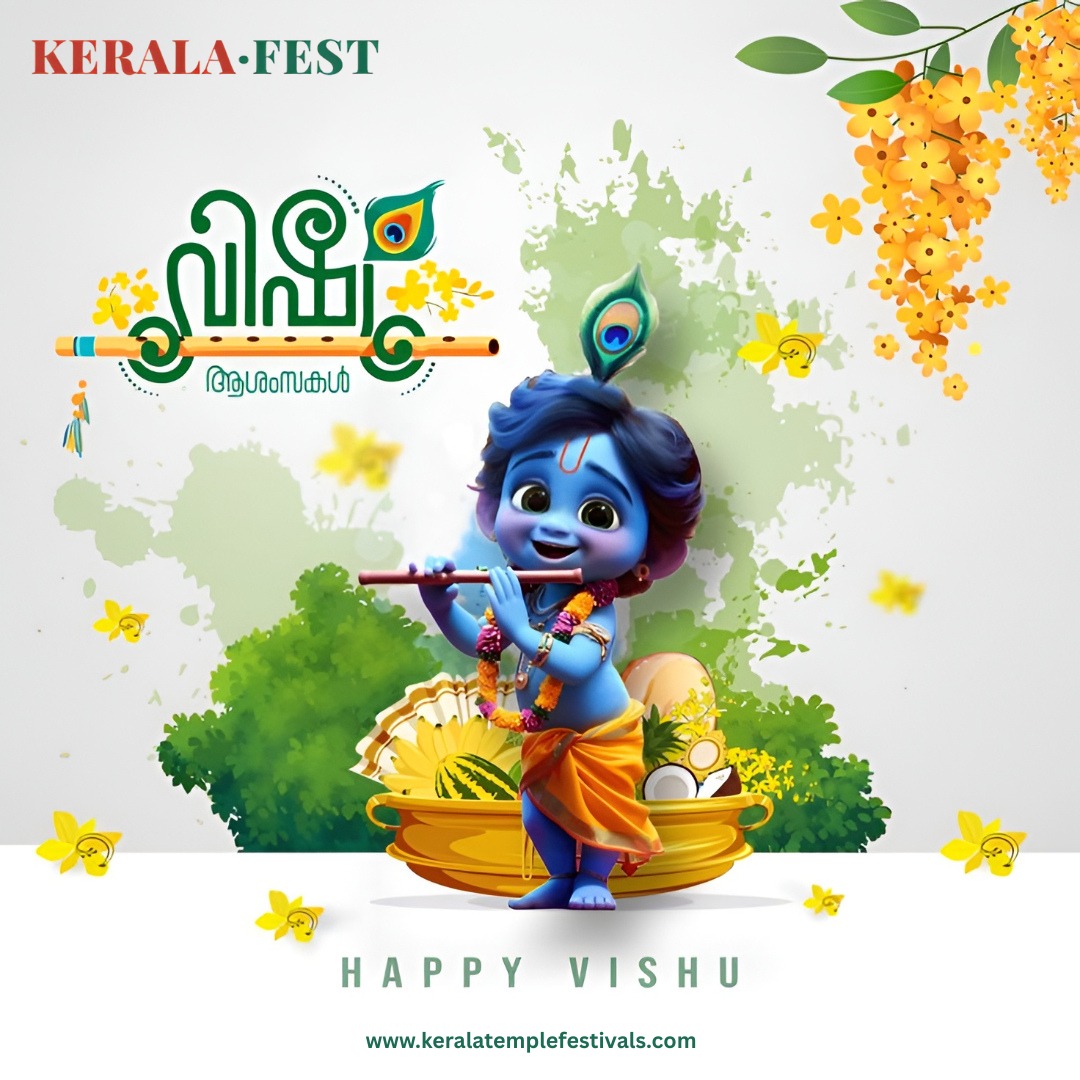
Vishu 2026
Vishu is a traditional festival celebrated in Kerala, Tulu Nadu and Mahe, marking the beginning of the Malayalam New Year. It falls on the first day of Medam in the solar calendar when the Sun transitions into the zodiac sign of Aries. This festival symbolizes new beginnings, prosperity, and hope, and is deeply rooted in Kerala’s cultural and spiritual heritage. Families across the region welcome the new year with devotion, joy, and togetherness.
One of the most important rituals of Vishu is the Vishukkani, an auspicious arrangement of items such as rice, fruits, Kanikonna flowers, gold, coins, and a Nilavilakku lamp placed before Lord Krishna or Lord Vishnu. It is believed that the first sight seen on Vishu morning determines the prosperity of the year ahead. The day also includes temple visits, offering prayers, preparing the grand Vishu Sadya and distributing Vishu Kaineettam by elders to younger family members.
Vishu is celebrated with great enthusiasm through family gatherings, wearing new clothes , bursting fireworks, and enjoying festive meals. Beyond rituals, the festival carries a deeper significance of renewal, gratitude, and positivity for the year ahead. It strengthens family bonds and community harmony reminding people to begin the new year with devotion, happiness, and good intentions.
🌟 Vishukkani Darshan
🍽️ Vishu Sadya
🎇 Fireworks Celebration
💰 Vishu Kaineettam
👗 Vishukodi